Step 1: Extraction
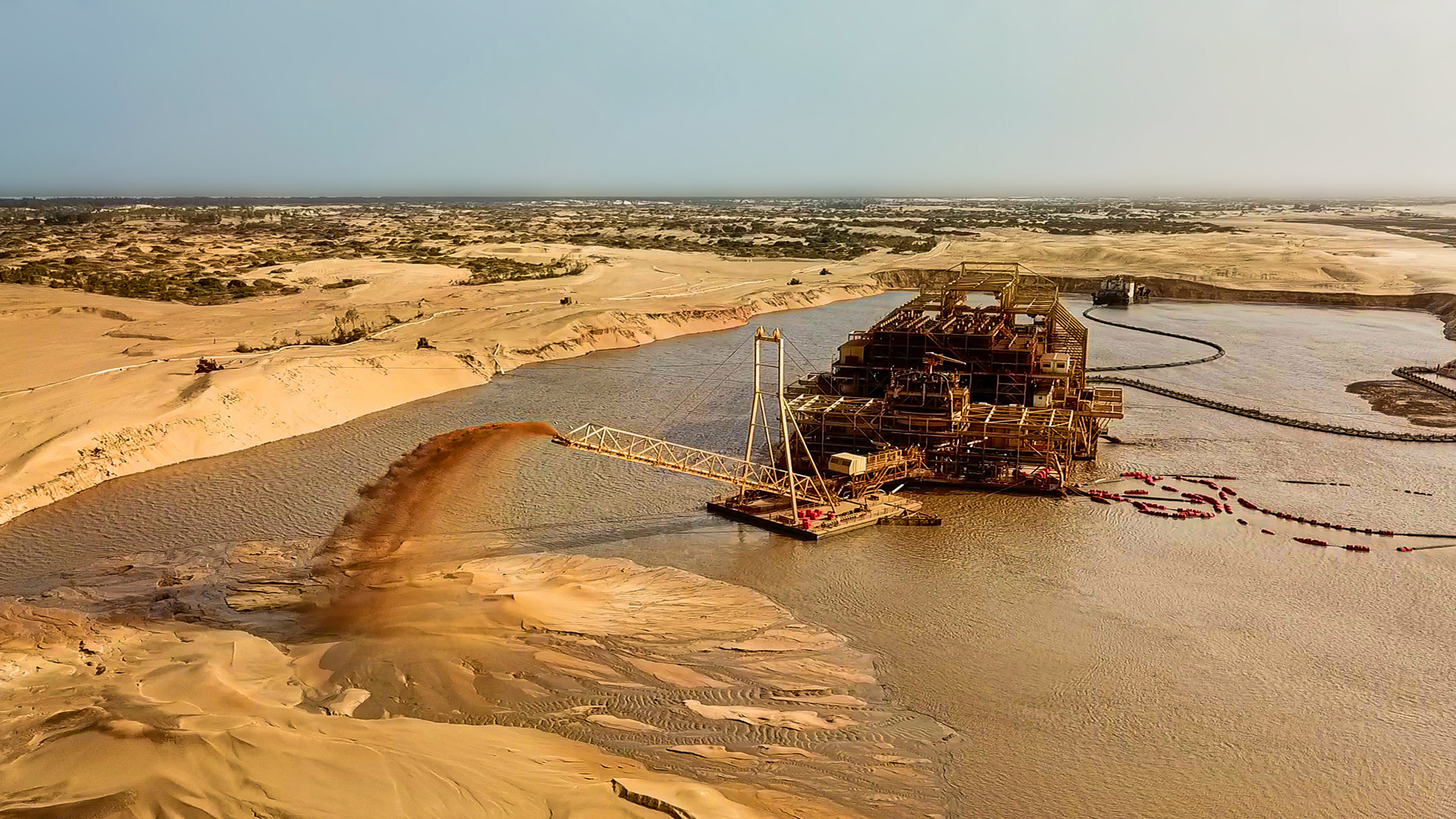
The ore is extracted using a floating dredge operating on an artificial basin measuring 600 meters by 300 meters. This equipment sucks up the sands located upstream of the basin, allowing controlled progress of the dredge—between seven and thirteen kilometers per year—along the concession strip. This strip is strictly localized on the dunes, in a zone delimited between the coastline and the Niayes agricultural region, both of which are preserved and unaffected by the operations.
Additionally, to access the lateral areas of the deposit, a mobile dry extraction unit, called Dry Mining, takes over. It enables the extraction of pockets of mineralized sands that are inaccessible to the dredge, while strictly remaining within the concession perimeter.

Step 2: Preparation of mineralized products
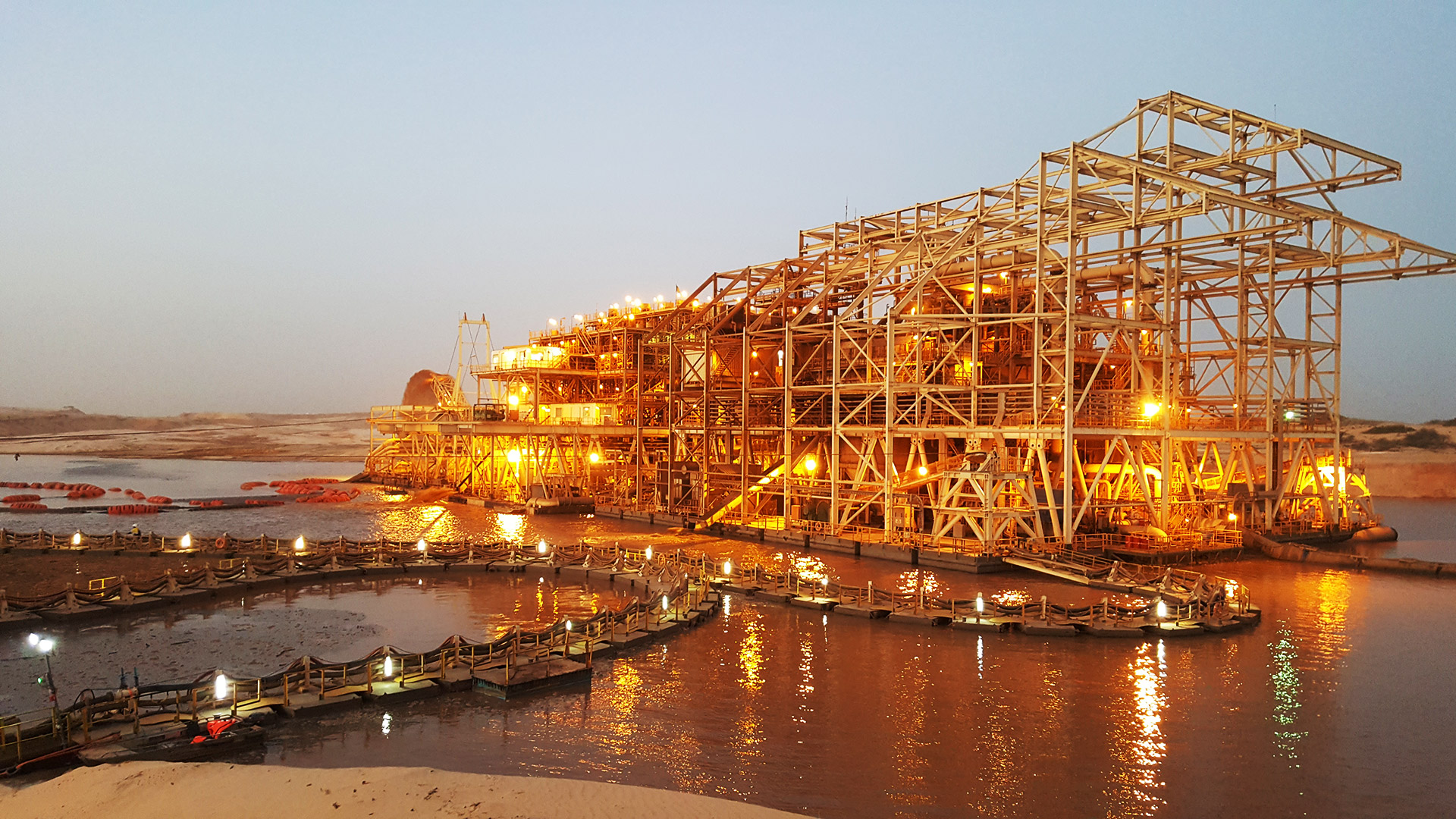
Once extracted by the dredge, the mineralized sands are transferred to Eramet Grande Côte’s first plant, which also floats on the basin behind the dredge: the Wet Concentration Plant (WCP).
Concentrating the minerals
Within the WCP, the sand is processed using physical methods, without any chemical inputs. A sequence of mechanical processes – rotary screens, hydro-cyclones, and spirals – separates the heavy minerals from the lighter sand. Called tailings, it will be redeposited at the back of the basin to reshape the landscape as closely as possible to its original state. This is the first step in the rehabilitation of the site before its restitution.
Separating minerals
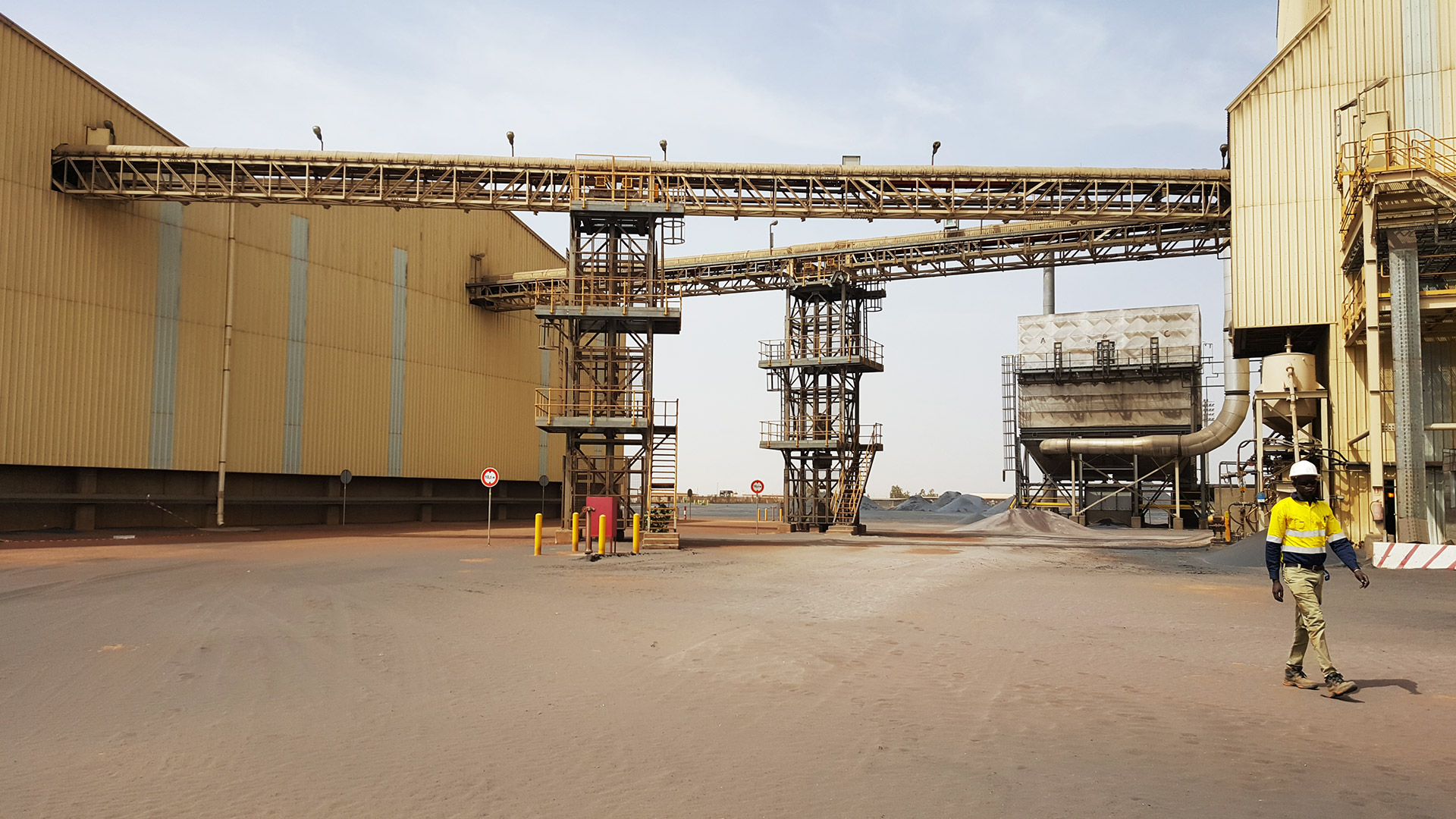
The obtained mineral concentrate (HMC) is then transported by truck to the separation plant located in Diogo: the Mineral Separation Plant (MSP). This industrial unit includes several lines, each dedicated to a product: zircon, ilmenite, leucoxene, and rutile. The separation operations are carried out at high temperatures before screening and the electrostatic and magnetic separation of the products. Again, no chemicals are used.
Step 3: Rehabilitation of the dunes
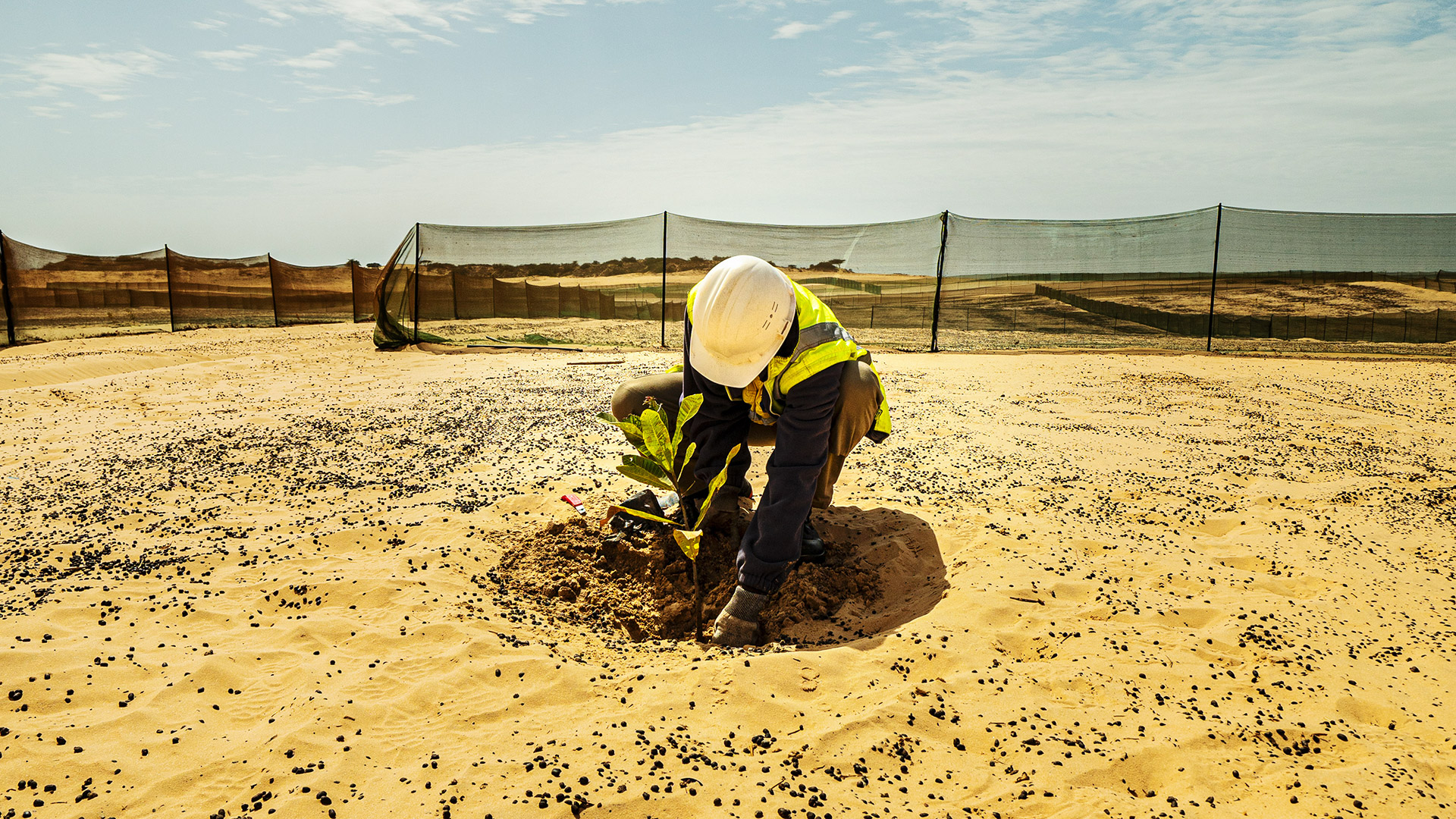
The rehabilitation of exploited areas is systematic and begins immediately after the concentration of mineralized sands—a specific feature of the Eramet Grande Côte mine model. Teams reshape the terrain as closely as possible to its original state, stabilize the soil, and plant endemic species and other varieties selected in consultation with communities for their economic value (fodder, cashew, timber, etc.).
In September 2022, Eramet Grande Côte became the first Senegalese mine to return rehabilitated and revegetated parcels (85 hectares) to the State, the owner through the Directorate of Water and Forests. The momentum continues: an additional 1,000 hectares were returned in 2025.