
Water: a managed resource
The operations of Eramet Grande Côte require the creation of an artificial water basin where the dredge and the separation plant operate. The company is committed to managing and optimizing its water consumption to ensure a quality resource that is accessible to all, particularly in the context of climate change.
This environmental commitment is all the more important as the Niayes region, which borders the mining concession, is a significant agricultural area for Senegal.
To protect it, Eramet Grande Côte conducted studies on the aquifer systems of the site from the exploration phase of the project. In its operations, and in agreement with the authorities, the company does not draw water from the shallow aquifer, known as the Quaternary aquifer, which is used by local communities. For the mine’s needs, the company has installed 14 boreholes, 400 to 500 meters deep, to access the deep Maastrichtian aquifer, which is not directly connected to the Quaternary aquifer, as the two aquifers are separated by impermeable barriers. These wells are located at least 5 km from the coastline.
To monitor the aquifer levels, a network of 300 piezometers allows continuous monitoring of the two aquifer systems, with information shared with the authorities, to whom all withdrawals are reported in real time. Monthly inspections are also carried out by state services.
Finally, as a complement, the company has drainage recovery units and water recycling boreholes to limit the exploitation of deep boreholes.
Rehabilitated and restored dunes
Eramet Grande Côte systematically rehabilitates its mining sites as soon as exploitation ends, aiming to restore them to a state as close as possible to the original condition. On average, 180 hectares are re-vegetated each year.
The reference condition of the site (soil, fauna, and flora) was characterized during initial studies. For the re-vegetation phase, local endemic species are prioritized. Communities and authorities were also involved. Their choices focused particularly on filao, darcassou, and eucalyptus, which help protect the dunes and produce fruits for local populations.
The best techniques are used to ensure the effectiveness of rehabilitation operations. For example, the layer of soil removed to create the drag path is preserved for later use during planting. Seeds used for rehabilitation are harvested from seed stands established in the area. Finally, windbreaks are installed before sowing to ensure good stability of the seedlings.
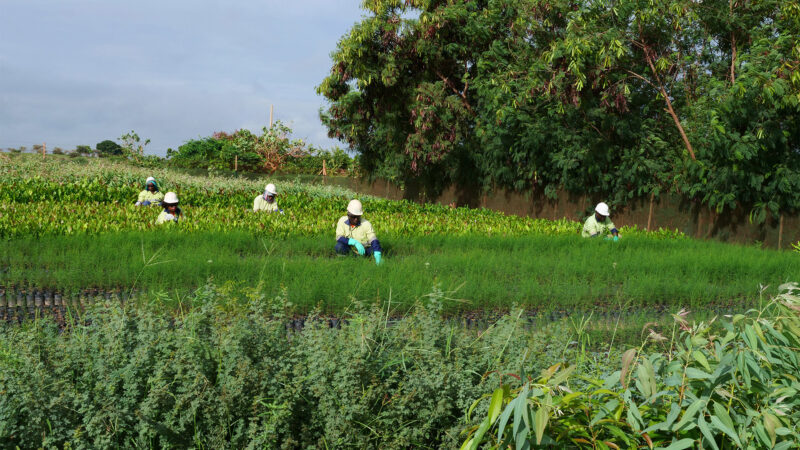 A nursery dedicated to sustainable revegetation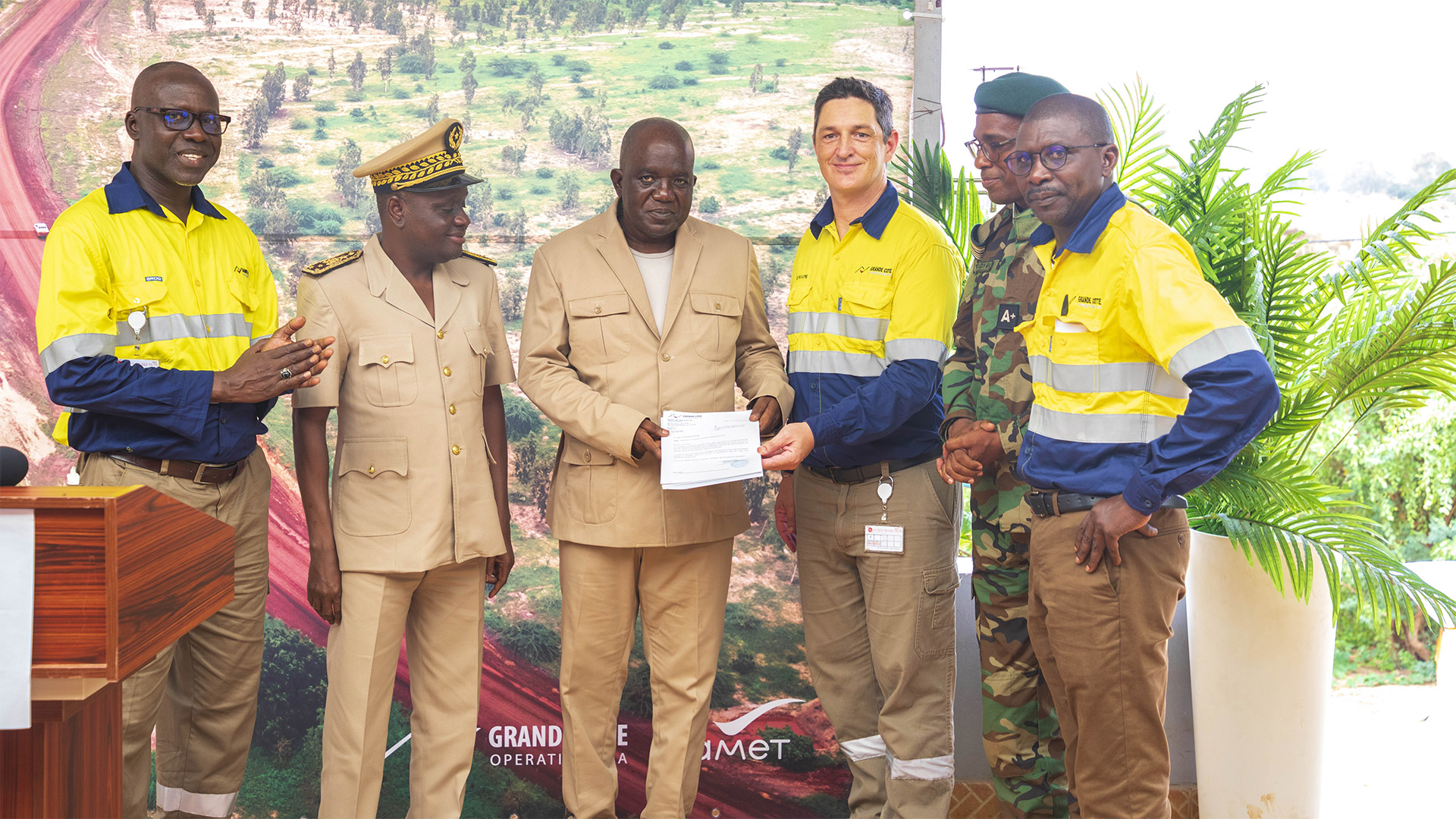
Once rehabilitated and revegetated, the site is returned to the Water and Forests Department, which is its owner. In 2022, Eramet Grande Côte became the first Senegalese mining company to return a rehabilitated mining site (85 hectares) to the Senegalese State. In total, more than 1,000 hectares will be returned by 2025.